In a past life, many years ago, I informally sought advice from a highly respected Wellington lawyer, the late Sandra Moran, over a legal issue that had been weighing on my mind.
It involved what I thought was an important point of principle, and I vividly remember Sandra warning me off by saying, very emphatically: “It costs a lot of money to establish a point of principle.” I didn’t have a lot of money, so I didn’t proceed.
At the time, I was astonished by what Sandra said. Surely principles are at the heart of the law and should be promptly and decisively confirmed by the courts? Of course I was naïve. Judges are generally restricted to applying the law as it’s written. Points of principle may be established in the courts, but often only after years of legal argument.
I was reminded of that this morning while reading NZME court reporter Ric Stevens’ account in the New Zealand Herald of a case that has been dragging on for years and is still far short of resolution.
It’s a case that cries out for justice, but the law keeps getting in the way.
Ida Hawkins’ 16-year-old daughter, Colleen Burrows, was raped and murdered by a gang associate on a Hawke’s Bay riverbank in 1987. One of her killers, Sam Te Hei, served 31 years in prison. A younger co-offender was released in 1998.
After he was paroled, Te Hei succeeded in a claim against the Crown for breaches of his rights while in jail. He was awarded $17,664.
In such circumstances, the Prisoners’ and Victims’ Claims (PVC) Act entitles victims of a crime to claim some or all of the money awarded to the criminal. Ida Hawkins did so and initially succeeded. She went to the Victims’ Special Claims Tribunal and was awarded $15,000 for emotional harm – paltry compensation for the anguish of losing a teenage daughter in appalling circumstances and then being harassed and intimidated by the Mongrel Mob, but at least she would have had the satisfaction of knowing Te Hei had been prevented from profiting out of his murderous act.
You can probably predict what happened next. Te Hei (or more precisely his lawyers) successfully appealed to the High Court on the basis that another piece of legislation – the Deaths by Accidents Compensation Act 1952 – didn’t create a right to damages for emotional harm, and this remedy was not available under the general law either.
Mrs Hawkins then went to the Court of Appeal, where her case was heard in the middle of last year. The court’s decision was released this week – too late for Mrs Hawkins, who died last July. In the meantime another daughter, Tracey Peka, obtained a court order allowing her to continue the legal fight.
Stevens’ story in the Herald describes the 34-page judgment from the Court of Appeal as “largely technical”. The veteran court reporter wrote: “It represented a win for the family in the sense that it upheld their appeal and kept their case alive, even as it found against some of their arguments.
“The court said that Hawkins did not have a claim under the Deaths by Accident Compensation Act for her emotional injury. Nor could she make a wrongful death claim under common law [law developed by the courts rather than decreed by Acts of Parliament], and the PVC Act did not provide a standalone basis for her claim either.
“However, the justices said: ‘We have … concluded that Mrs Hawkins may have a common law claim for her mental injury arising from the circumstances of the rape and death of her daughter Colleen. If she does, it appears that such a claim would be confined to exemplary damages.’ ”
Did the court then determine that Mrs Hawkins (or her family, given that she’s no longer alive) was entitled to Te Hei’s ill-gotten gains, or at least a share of them? Oh no, that’s not how the system works. The court referred the matter back to the Victims’ Special Claims Tribunal which had heard the case in the first place.
The appeal judges said they were sending the case back for reconsideration and suggested the tribunal might seek further evidence and call for written submissions. They noted that the case involved complex legal issues.
So here we are, five years after the decision that gave rise to Mrs Hawkins’ claim, and the case will again get swallowed up by the system. For how long? That’s anyone guess. Common law evolves at a glacial pace and we’re expected to just be patient while Their Honours deliberate.
To use the vernacular, the Court of Appeal judges kicked the can down the street - in fact possibly beyond that into the long grass.
There will be more dry legal argument and more lawyers’ fees. In the meantime Mrs Hawkins has died and I imagine costs will have more than eaten up any compensation she might have been able to look forward to had she lived. Indeed I would imagine that arguments over costs have the potential to keep the case grinding on even longer.
This seems a case of an important principle being lost in a swamp of nitpicking legalism. While judges and lawyers debate arcane points of law, a terrible injustice goes uncorrected.
Most reasonable people would have no difficulty deciding that Mrs Hawkins’ entitlement to compensation for harm and wrongdoing far outweighs that of her daughter’s murderer, but that’s not how the system works.
It should be simple, but it isn’t. Sandra Moran was right.
Friday, February 28, 2025

Saturday, February 1, 2025
Marching blindly into the post-journalism era
Herewith, two unrelated (or perhaps not) examples of the insidious bias that pervades the mainstream Western media. Neither is necessarily of any great consequence on its own, but each is telling in its own way.
■ In a 470-word story on the jailing of former US senator Bob Menendez following his conviction on bribery and corruption charges, the BBC could find no room to mention that he was a senior Democrat.
You can be sure that if he was a Republican, i.e. a Trumpist, we would have been told in the first few lines.
The BBC’s story did mention that Menendez’s son was a Democratic congressman, but that was all.
Inadvertent oversight? Hmmm.
We were told that Menendez, who accepted bribes from foreign governments, notably Egypt, was a former chair of the Senate Foreign Relations Committee – but still no mention of his party.
And if you clicked on a link to the BBC’s earlier story about his conviction last July, you learned that Democratic Senate Majority Leader Chuck Schumer called for Menendez to resign. But even then there was nothing to indicate that Schumer was talking about a member of his own party, and readers could have been excused for assuming Menendez was a Republican.
The headline read Senator Bob Menendez found guilty in bribery scheme. It’s dollars to donuts that if he was from the other side of the aisle, it would have said: Republican senator found guilty in bribery scheme.
Only towards the bottom of that 687-word story was there any indication that Menendez was a Democrat, and even then it wasn’t explicit.
There are two possible explanations here. One is that the BBC’s stories were written and edited by journalists so incompetent or amateurish that they didn’t think Menendez’s party affiliation was significant.
The other is that the BBC (which is taxpayer-funded and therefore has a special obligation to be politically neutral) decided the Democratic Party should be spared the embarrassment of being associated with a corrupt senator. Either explanation is unacceptable, but the second is the far more plausible one.
■ An Associated Press report refers to Mark Zuckerberg’s Meta and other technology companies “trying to ingratiate themselves” with the Trump administration.
I’m sure that’s exactly what the loathsome Zuckerberg and other tech titans were doing, but it’s not the function of an AP reporter to tell us. There should be no place in a straight, factual news account for a loaded word such as “ingratiate” unless the reporter is quoting someone.
A competent reporter, by simply conveying the facts of the story, can leave it to readers to decide for themselves whether Zuckerberg is cravenly sucking up to the White House. Readers are capable of drawing their own conclusions and should be left to do so without being led by the nose. But news stories are now often fatally contaminated by casual, pervasive bias and the intrusion of reporters’ personal judgments.
To allege that someone is trying to ingratiate himself involves such a judgment. Such things used to be the domain of editorial writers and columnists expressing what was clearly identified as opinion. But in 2025, all reporters consider themselves editorialists and the dividing line between "news" and comment has been all but erased.
When I read any “news” story about American politics, my eye goes straight to the bottom to identify the source. If it’s from AP, the Washington Post or the New York Times I know not to assume that it’s balanced and accurate (and by “accurate”, I mean not distorted by the omission of any relevant facts or background information that might not align with the reporter’s perception).
The Washington Post and the New York Times are entitled to spin the news as they think fit and accept the consequences, even if they compromise their credibility in the process. Their subscribers can always opt out if they don’t like what they’re reading. But wire services such as AP operate in a different context.
Because they are usually co-operative enterprises that supply news to media outlets from all points of the political compass, wire services have traditionally been careful to avoid any hint of bias. New Zealand’s own much-lamented NZPA was always rigorous in observing editorial neutrality. But that rule has been jettisoned at AP, whose reporters clearly feel no compunction about feeding the news through an ideological filter. AP political stories come heavily larded with journalists’ own perceptions which are invariably hostile to the political Right.
Stories about Trump, for example, routinely refer to his “lies” and “falsehoods”. These are terms that previous generations of news reporters would never have used unless they were quoting someone. They would have presented the facts and left it to readers to decide for themselves whether the president had a flagrant disregard for the truth (which is clearly the case, but I’m permitted to say that because this is an opinion piece).
The frequent use of the disparaging terms "far right" and "extreme right", to denote all but the mildest and least threatening politicians on the conservative side of the spectrum, is another means by which leftist journalists reveal their ingrained priggishness.
The now-habitual intrusion of personal opinion into “news” coverage isn’t just a breach of traditional journalism rules. On a purely pragmatic level it’s crazy because it accelerates public distrust of an already failing media industry.
It appears not to have registered with American journalists that Trump won the presidency despite overwhelming media opposition. The message was clear: the US mainstream media have rendered themselves largely irrelevant.
When journalists have fallen so clearly out of step with the public mood, they need to re-evaluate themselves. But there’s no sign of that happening, and so journalism blindly continues its determined and suicidal march into the post-journalism era.
Sunday, January 26, 2025
A journey into the hinterland
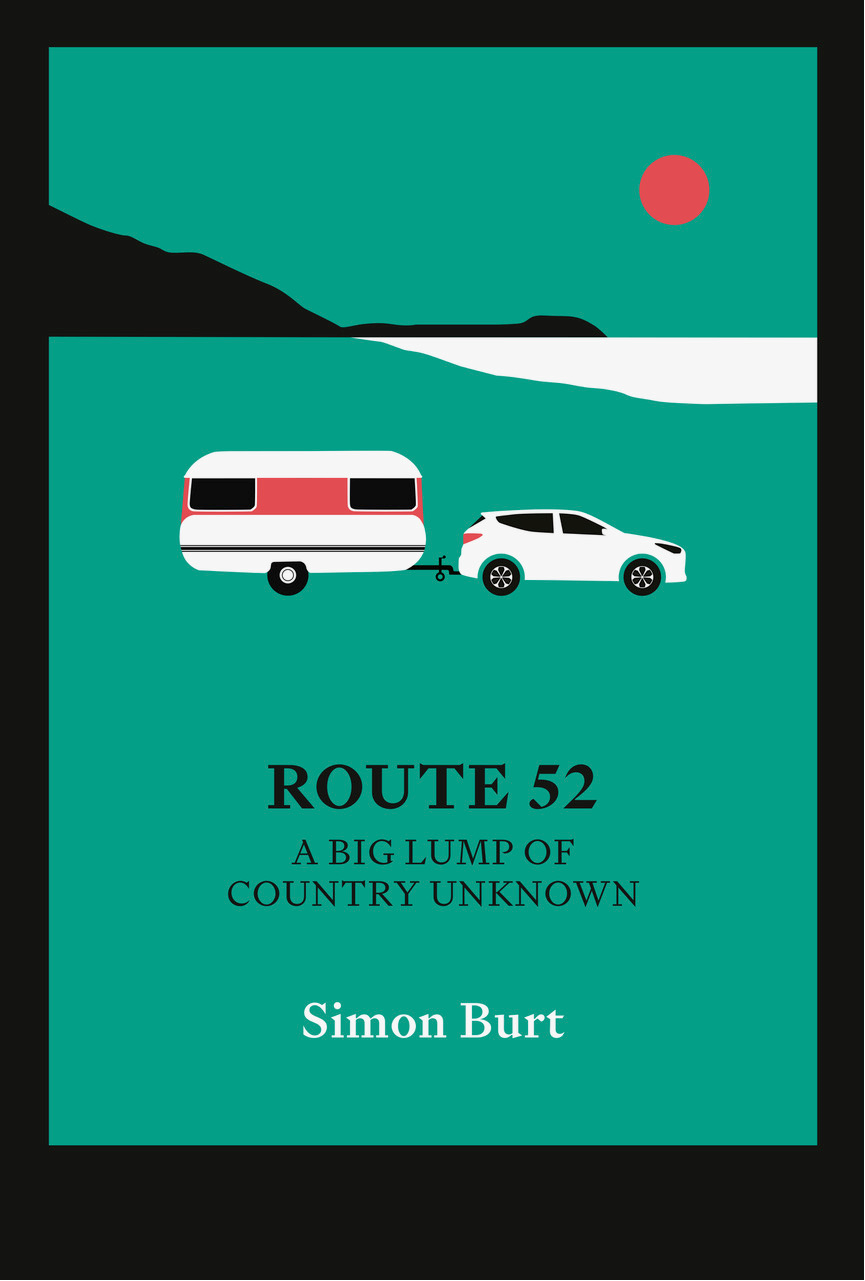
Hedley's Book Shop in Masterton was packed on Friday night for the launch of my friend Simon Burt's book Route 52: A Big Lump of Country Unknown, published by Ugly Hill Press.
It was actually a second launch, the first having been held two nights earlier in Waipukurau. Why the double launch? Because Waipukurau marks the northern end of Route 52 and Masterton the southern. They could hardly have an event in one town and ignore the other. Wars have been fought over lesser issues.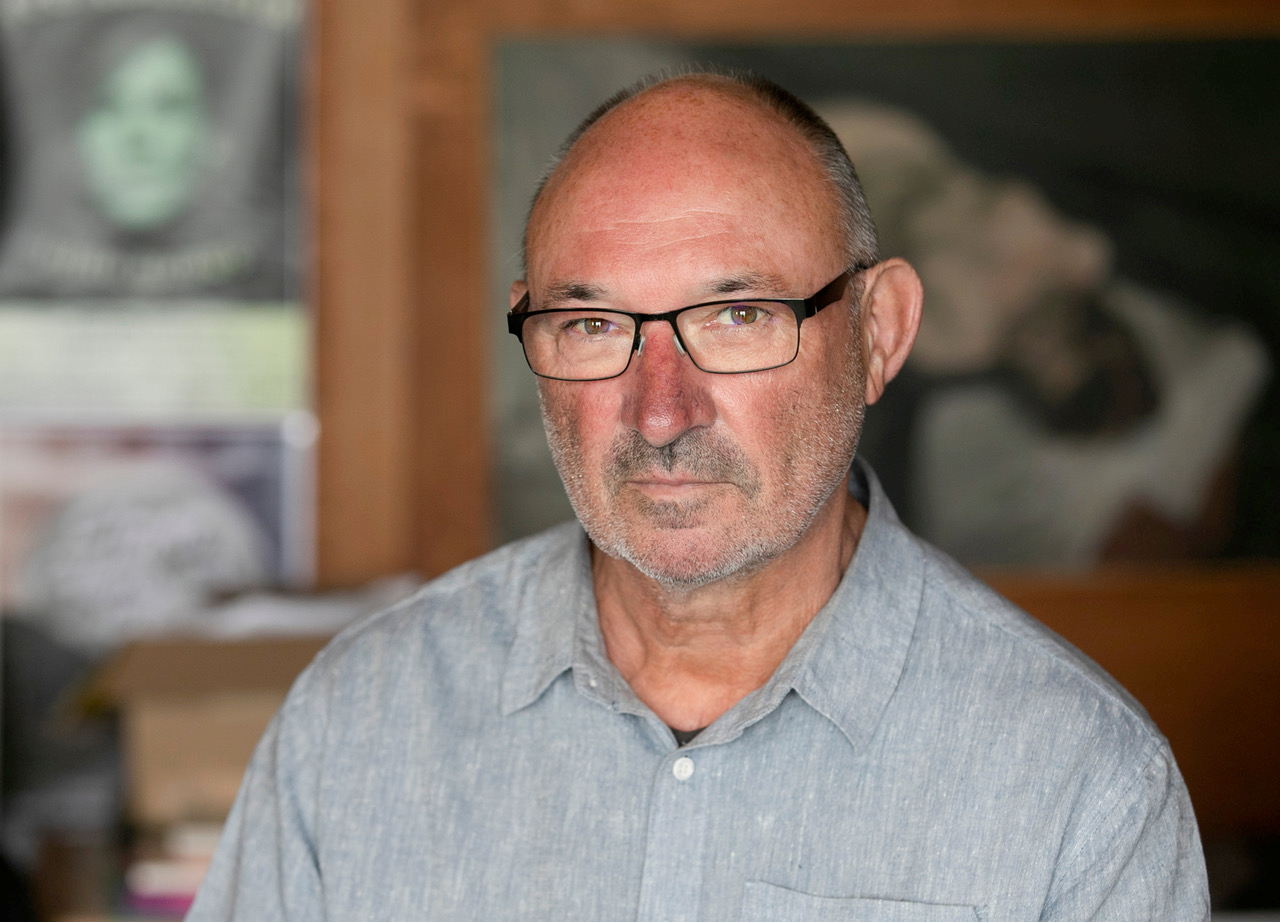
Simon Burt
Once officially designated as a state highway but demoted when usage declined, Route 52 is the quintessential road less travelled, passing through the back country of the northern Wairarapa into southern and central Hawke's Bay and giving access to remote coastal settlements such as Akitio, Herbertville and Porangahau.
I had the honour of speaking at the Masterton launch and this is what I said:
I’m not one to boast, but I reckon I’m unusually well
qualified to launch a book about Route 52. I grew up in Waipukurau, where the
road starts (or finishes, depending on which way you’re travelling) and I’ve
spent the past 22 years living in Masterton, at the other end.
My ties to Waipuk, as we always called it, are permanently cemented by the fact that my parents and three of my brothers are buried in the cemetery there, within a few metres of each other. I also have a direct personal connection with something that’s mentioned briefly in Simon’s book. I refer to the torii, or traditional Japanese arch, that my father designed and built in the mid-60s on the top of the Pukeora Hill. It was put there to frame the superb view of Waipukurau that travellers saw as they came over the brow of the hill from the south – a view that’s rarely seen these days because the main highway was re-routed decades ago, although Dad’s torii is still there.
Not only do I have connections with Waipuk and Masterton, but I was born in Pahiatua. Strictly speaking, that’s not on Route 52, but it’s close enough to warrant a chapter in Simon’s book, which is good enough for me. Note that I pronounce it as Pahi-atua rather than Pie-a-tua, because my mother always insisted that that was the correct Maori pronunciation and I believe she was right.
Speaking of personal connections, I should note that Deborah Coddington was the perfect person to publish Simon’s book, because Deborah grew up at Wallingford in Central Hawke’s Bay, through which Route 52 passes, and she named her publishing company after the rural road her family lived on.
Like me, Deborah would have recognised many of the names in Simon’s book and would have personally recalled some of the people he writes about. And I suspect that also like me, the places where she spent her childhood left a permanent imprint on her, and the naming of her company, Ugly Hill Press, was a way of paying homage to her origins.
Anyway, on to Simon’s book. I think it’s a terrific book: part road trip, part personal memoir and part social history. Steve Braunias has described it as a psychogeographical travel book, which is an impressive word even if I’m not entirely sure what it means.
And although I’m sure Simon doesn’t think of himself as a journalist, the book also qualifies as an exemplary piece of journalism. I say that because it’s largely driven by Simon’s curiosity, and curiosity is an essential element – perhaps the essential element – of good journalism.
Simon was curious about the history of the places on Route 52 and the people who have spent their lives there, so he did what a good journalist would do – he set out to find out about them. He’s dug deep and done a daunting amount of research, but it never weighs the book down. It’s an easy and engaging read that you can dip into as the urge takes you.
One mark of good writing is that it flows so easily, it gives you no clue to the hard work that went into it. That’s true of this book.
Route 52 documents the social history of a remote part of New Zealand that we knew very little about. I can’t recall whether Simon actually uses this word, but his book is all about the hinterland, one nice definition of which is “an area lying beyond what is visible or known”.
I learned a lot from reading Simon’s book. I learned, for example, that the reason there’s a wide, park-like strip down the main street of Pahiatua was that the railway line was originally intended to run through the centre of town. I learned that the Wilder Settlement Road in Central Hawke’s Bay, which I was familiar with in my childhood, didn’t get its name because a settlement was built there; in fact the name came from a marital agreement under which land was made available to sons of the Wilder family as part of a dowry. That became known as the Wilder settlement. Who would have guessed?
I also learned that the claustrophobic, inky-black tunnel that my friends and I used to squeeze through in the hills near Waipukurau was created for an irrigation scheme that was later abandoned. And I discovered that Porangahau was once known as Coconut Grove because of the number of Rarotongans who lived and worked there to make up for a labour shortfall during the Second World War. Somehow I don’t think the name Coconut Grove would pass the PC test now.
It’s worth mentioning too that Simon has taken the trouble to delve into an area of history that remains sorely neglected. I refer to our pre-European history, and I was pleased to see that he devotes space to the superb information displays in Pukekaihau, which most people know as Waipukurau’s Hunter Park. These illustrated panels explain in rich detail the pre-European history of the Waipukurau district, and I recommend them to anyone passing through the town with an hour to spare.
Above all, Route 52 is a book about people – and I don’t mean well-known names or official poo-bahs or would-be celebrities who big themselves up on social media, about whom we already know far more than we want to know. Rather, it’s a celebration of New Zealand’s rural culture and a glimpse into the lives of farmers, shearers, shepherds and others, not to mention their resourceful and formidable wives, many of whom have spent their entire lives in the rugged and challenging landscape through which Route 52 passes. I was going to make the mistake of saying these are ordinary people, but many of them are anything but ordinary. A better word would be authentic.
Barry Crump used to write about such people, albeit in a fictional context, and so did Jim Henderson. The Christchurch Press journalist Mike Crean was another writer who had a talent for talking to ordinary people – sorry, I mean authentic people – and getting them to tell their stories.
Simon has the same skill and empathy, writing with a light and often whimsical touch but always respectful toward his subjects. He has captured a part of New Zealand that is slowly but irrevocably disappearing – in fact, sometimes almost literally disappearing under a relentlessly spreading cloak of pinus radiata, which is a recurring theme in his book and gives it a slightly elegiac tone.
But that’s as much as you want to hear from me. Deborah asked me to keep my speech short, so it only remains to congratulate Simon on a great book and break an imaginary bottle of champagne – or perhaps that should be Tui – over its bow.
Simon Burt
Wednesday, November 27, 2024
Wellington Airport's rebranding exercise: And the point is?
I’m not a shareholder in Wellington Airport but if I was, I’d be getting up on my hind legs at the next annual meeting to object to an extravagant promotional charade that demonstrates how completely the corporate sector has been captured (or should I say conned?) by the twin forces of marketing hucksterism and feel-good wokery.
The online platform Stop Press, which uncritically chronicles all the absurdities perpetrated by the bullshit artists of the PR and advertising industries, reports that the airport company is undertaking a rebranding exercise in which it will become “WLG – a portal to the future”.There’s nothing in the Stop Press item to indicate why it was deemed necessary to change the brand. “Wellington Airport” describes perfectly well what the company does and I confidently predict that that’s how it will continue to be known long into the future. But the PR and advertising industries derive a lot of their income by suckering gullible corporate clients into pointless rebranding exercises and this seems a classic example.
But it goes far beyond that, because the rebranding incorporates an element of fashionable virtue-signalling that crosses into the realms of pure make-believe. I’ll let Stop Press take up the story – but be warned: it’s a textbook piece of flatulent PR puffery.
Two decades ago, the airport in the capital rebranded with a new positioning, “Wild at Heart,” which captured the spirit of the place and land where it stands.
Alongside brand storyteller Everyone and Kura Moeahu (Te Atiawa, Nga Ruahine, Taranaki-tuturu, Ngati Mutunga, Ngati Tama & Ngati Toa), Wellington Airport has continued the narrative by delving into the ancestry of the harbour and the forces and guardians that shaped it.
The aim is to capture Wellington Airport Rangitatau as WLG, a portal to the future.
“The best stories start with listening,” says Cameron Sanders, Managing Director, Everyone. “We were introduced to the story of the legendary bird Te Manu Muramura and the rich narratives and graphic forms that are etched into the land, water and sky here.
“And we also heard the passion and commitment of airport staff, Wellingtonians, local government and local artists when they told us what the airport means to them and how it relates to the city.”
Matt Clarke, CEO, Wellington Airport adds that the airport has always been filled with stories.
“But we really haven’t had any Mana Whenua stories, stories of the land beneath the airport, and that’s something we’re really looking to introduce to the terminal and the welcome to the city.”
Another revelation was the proximity between Rangitatau, the ancient portal the bird spirit took to the beyond, and the Airport’s place. The design team looked to draw a direct parallel between the power of this legendary portal and the role of the Airport as the region’s portal, a gateway to central New Zealand.
“Collaborating closely with local artist Manu Winata (Ngāti Raukawa, Te Āti Awa, Ngāti Awa, Ngāti Tūwharetoa), we explored the concept of imagining the gateway of Rangitatau – our portal to the universe,” says Everyone Creative Director Andrew Treder.
“We created a suite of dimensional light portals that illustrated the entirety of the origin story, passing through the realms of sea, land and sky. Through this, we have looked to position Rangitatau as a portal to the universe for manuhiri returning home, a gateway to central New Zealand and a launch pad for those setting off to explore new horizons.”
As air technology continues to evolve, the team wanted to acknowledge that the future is aerial, and that WLG is very much part of that.
“We hope that our Airport, Wellingtonians, and manuhiri can reflect on, share and contribute to this living narrative,” says Everyone Producer Nathan Blundell. “The launch video re-tells the origins of Wellington Harbour while inspiring its next chapter, reflecting a wish from mana whenua that these stories don’t remain as once-upon-a-time tales, but are shared in a present context and continue to evolve.”
“The new brand identity, the many touchpoints and of course the beautiful broader visual language have all been designed to honour everything that got the Airport to this point, and all that is yet to come,” explains Cam Sanders.
“The new telling of this airport’s story is exciting, confident and vibrant. We’ve built on the emotion of Wild at Heart, but with the insights of all involved, we’ve expressed WLG as an Airport of Tomorrow and a place of unparalleled aerial activation. Our two-decade partnership with WLG has been one of passion, innovation, and collaboration. We can’t wait to see where the journey leads next.”
Let’s try to unpick some of this preposterous gibberish. “The ancestry of the harbour and the forces and guardians that shaped it”, for instance. The harbour is not a person, therefore has no ancestors. The forces that shaped it were geological. The idea that it was shaped by “guardians” is romantic tosh, deployed here to satisfy Wellington Airport’s desperate desire to be seen as culturally sensitive.
In any case, how does the harbour come into it? Wellington Airport was the creation of engineers and contractors who flattened Rongotai Hill, demolished or relocated 180 houses and shifted enormous amounts of earth to create a flat space for planes to land on. The harbour just happens to be adjacent. Was this a case of the rebranding team deciding the construction of the airport provided no suitably inspiring cultural narrative and focusing on the harbour instead, even though it’s not integral to the airport story?
“We were introduced to the story of the legendary bird Te Manu Muramura and the rich narratives and graphic forms that are etched into the land, water and sky here.” Yes, but what does this actually mean? Exactly what “rich narratives” are etched into the land, water and sky, and how do they relate to a company whose function is simply to run a safe, efficient and profitable airport? Who has heard of Te Manu Muramura (I hadn’t) and what relevance does he/she have to a 21st century aviation business? (I’m not knocking or demeaning Maori myths and legends here; they are a valued and unique part of our heritage. I’m just tired of them being opportunistically exploited for spurious purposes.)
Another revelation was the proximity between Rangitatau, the ancient portal the bird spirit took to the beyond, and the Airport’s place. The design team looked to draw a direct parallel between the power of this legendary portal and the role of the Airport as the region’s portal, a gateway to central New Zealand.
I had to look up Rangitatau. It was the name of a pa that once overlooked Tarakena Bay, which is tucked around the headland immediately east of the airport. Here we go again – straining to find a connection with Maori mythology where there is none. It may have suited the “design team” to convince themselves of such a connection, but no one else (with the exception, perhaps, of credulous Wellington Airport executives such as Matt Clarke) is going to buy it.
“We created a suite of dimensional light portals that illustrated the entirety of the origin story, passing through the realms of sea, land and sky. Through this, we have looked to position Rangitatau as a portal to the universe for manuhiri returning home, a gateway to central New Zealand and a launch pad for those setting off to explore new horizons.”
This poetic piece of spin relates to the 5-minute video produced – no doubt at great expense – to accompany the “rebranding”. Again, the video draws heavily on Maori mythology relating to the creation of Wellington Harbour – or Te Whanganui-a-Tara, if you prefer – and goes so far as to imply the creation of the airport was inspired by events in Maori legend. I’m sure that would have come as a revelation to the engineers and contractors who built it.
As for the rest of the comically pretentious launch material reproduced in the Stop Press report, I marvel that whoever wrote it managed to do so with a straight face. But the tragedy is that they probably believe their own bullshit.
Here’s my prediction. The “rebranding” will serve no purpose beyond gratifying the egos of the people who commissioned and produced it. Given that no industry celebrates itself more enthusiastically than the advertising business, the video will almost certainly win a prize (and in the process, reinforce my contention that “award-winning” are the two most meaningless words in the English language). But the entire grandiose exercise will pass unnoticed by the rest of the world, including the countless thousands of people who use Wellington Airport. In which case, can someone please explain what the point is?
Footnote: It occurred to me after publishing this post that Wellington International Airport Ltd is not a listed company, being jointly owned by Infratil and Wellington City Council. There would therefore presumably be no annual meeting at which shareholders could air their gripes. Nonetheless, my points stand.
Wednesday, October 16, 2024
The sad, ignoble decline of Frog City
On a recent Monday morning, my wife and I had breakfast at Bordeaux Bakery on Thorndon Quay, Wellington. I expressed surprise that the place was empty. A couple of years ago it would have been humming.
We sat by the window with a view over the street. What we saw was a forest of traffic cones and red-and-white posts delineating the cycle lanes that have spread like a cancer all over the city (a city, it should be noted, whose topography makes it singularly unsuited to cycling because many of its main thoroughfares are narrow and winding).Cyclists rode past in dribs and drabs on their way to work but there were no cars outside because there were no parking spaces. One guy took his chances, stopping illegally for a few minutes while he came in for a takeaway coffee. Other than that, it was just my wife and me.
I felt sorry for the staff. Working in a business with no customers must be demoralising.
It was no surprise, then, to read the depressing announcement only days later that the three Bordeaux cafés around the city were closing, causing the loss of 40 jobs. The owner of the company was blunt about the primary reason: “Everyone keeps telling us how hard it is to get to us,” he told the NZ Herald.
And so continues the slow, torturous death of a city that 20 years ago was buzzing with vitality, ideas and promise. Wellington today is a hostile, alien environment, unfriendly and often bewildering even to its own residents, to say nothing of hapless outsiders trying to navigate streets that resemble obstacle courses. I spent most of my working life in Wellington but sometimes barely recognise the moribund city it has become.
Who’s to blame? The decay began in 2010 when Wellington voted out the last in a long run of capable mayors and perversely allowed itself to be persuaded its future lay with a Greenie blow-in from Britain. Three more useless mayors and Left-dominated councils later, the city has become so terminally dysfunctional that government intervention looks both likely and necessary.
But while it’s easy to pin the blame on ideologically driven zealots at the council table and the tone-deaf, unelected commissars and planners who really run the show, not to mention their media enablers (the Dom Post, under a former editor, harangued its readers almost daily with lectures on the virtues of cycling), it has to be said that the citizens and voters of Wellington can’t entirely escape responsibility.
It’s an old cliché that people get the governments they deserve and the same can be said of councils. New Zealanders en masse tend to be passive, complacent and apathetic. The late Gordon McLauchlan, in his book The Passionless People, called us smiling zombies. We gormlessly stand by while stupid and dangerous things happen, then shriek with indignation when the damage has been done.
We’re all familiar with the parable about the frogs in a pot of water that heats so gradually they don’t realise they’re being cooked alive. By the time the temperature reaches boiling point, it’s too late to reverse the process. The scientific veracity of the analogy has been challenged but it’s apt nonetheless. The city's steady decline, so obvious to occasional visitors, may not seem so apparent to the people who actually live there.
In this case, the frogs are the people of Wellington who allowed a clique of barmy activists to take over their once-proud city. My good friend Neil Harrap points out in a letter in The Post today that Wellingtonians who voted in the last local government elections were far outnumbered by those who couldn’t be bothered. There’s the problem, right there.
Monday, October 14, 2024
The rising stars of the Southern Cross

[An abridged version of this article was published in the September issue of North & South.]
You know you’re getting old when you can look at a 1949 Christmas card illustrated with caricatures of the editorial staff of the Labour Party newspaper the Southern Cross and not only recognise many of the names, but recall knowing them personally.
I didn’t know them then, of course; I hadn’t quite been born. But I worked and drank with them two or three decades later.
The Christmas card (above) is reproduced in Pressing On, the second volume of Ian F Grant’s monumental two-part history of New Zealand newspapers. Volume I, Lasting Impressions, covered the period 1840-1920 and was published in 2018. The sequel, which was launched in May, brought us up to the year 2000 – a cut-off point sensibly chosen because after that, things got messy and chaotic in the print media, with no clear picture of where all the turbulence would lead. (It’s probably safe to say there will be no Volume III, or if there is, it will be a lot shorter than the 670 pages of Pressing On.)
The Christmas card reproduced in Ian’s book was drawn by John McNamara, aka “Mack”, the Southern Cross’s resident illustrator. The subjects were identified in spidery writing so tiny that I had to use a magnifying glass.
In those days newspapers pompously referred to reporters and sub-editors as their “literary” staff. I couldn’t help letting out little yelps of recognition as I identified those depicted on the Southern Cross Christmas card. Not all of them, but quite a few.
They were journalists of a generation that now seems as distant and archaic as clunky Imperial 66 typewriters, wads of copy paper, metal spikes on sub-editors’ desks (on which to impale stories that didn’t make the grade), Lamson tubes (pneumatic suction tubes for dispatching stories to the printer to be set in type) and overfilled ashtrays – all standard newspaper office appurtenances in that era.
Even the Southern Cross itself was a thing of antiquity. The idea of a daily paper published by a political party is unimaginable now, but the Southern Cross was born out of frustration with newspapers that were seen at best as unsympathetic, at worst downright hostile, to the political and industrial wings of the Labour movement.
Launched in Wellington in 1946, the Southern Cross was Labour’s attempt to even the score, or at least the odds, in the battle for the public’s hearts and minds. But the paper lasted only five years before being brought down by a combination of inadequate capital, incompetent management, struggles for control between competing party factions, and not least by the departure of journalists who, although sympathetic to the cause, became fed up with being told what to write by the likes of party leader Peter Fraser and trade union tyrant Fintan Patrick Walsh.
Seventy-five years on, the Southern Cross is notable chiefly for the talented people it employed, many of whom went on to positions of prominence as writers, editors and broadcasters – which brings us back to the faces and names on that 1949 Christmas card.
In the top row, I see Ian Cross, Noel Hilliard and Winton Keay.
More than two decades on from his stint as a young reporter at the Southern Cross, Cross would become the Listener’s most successful editor ever, albeit helped by a state-imposed monopoly on the right to publish weekly TV and radio programme schedules. Long before that, he had attained fame as the author of The God Boy, a novel partly inspired by a murder trial he had covered as a young reporter but also incorporating elements of his own Catholic childhood. Published in 1957, The God Boy was acclaimed by the New York Times as “a brilliant first novel”. Its success wasn’t replicated by his later literary efforts and Cross vanished into the PR game before resurfacing at The Listener in 1973.
I first dealt with him after he was appointed chairman of the Broadcasting Corporation in 1977, effectively making him the supremo over virtually all television and radio, which was then still under tight state control.
Cross was a zealous defender of the Listener’s sole right to publish TV and radio programme information in advance. Daily newspapers were allowed to publish programme listings no more than 24 hours ahead, giving the government-owned Listener a huge competitive advantage. On one occasion, when a paper challenged the monopoly by breaching the rules, Cross punished the entire daily press by withholding all programme information – a petulant response that penalised the public at large. I edited the Evening Post’s TV page at the time and wrote a column accusing him of behaving like a teacher who placed the whole class on detention because of one pupil’s transgression.
I interviewed Cross at length for the Listener in 2014, in the big, chilly Kapiti Coast house where he rattled around with his wife Tui. Cross was a hard man to read; not cold, exactly – that would be overstating it – but rather distant and aloof. Like many good journalists, he always retained something of the quality of an outsider. When he died in 2019, I was privileged to write his obituary for the magazine he had once edited.
Noel Hilliard was another who became famous as an author. His 1960 novel Maori Girl, which was followed in 1974 by Maori Woman, broke new ground by tackling the taboo subject of racism in New Zealand. He and I worked together in the 1970s at the Evening Post, where Noel was a sub-editor. We lived a short distance away from each other in Titahi Bay, and on the rare occasions when I had the use of an office car I would sometimes drive Noel home, he never having had a driver’s licence (a peculiarity he shared with several other male journalists of his vintage). I would sometimes sit with Noel’s wife Kiriwai on the bus from Porirua station; she hailed from the Far North and had been introduced to him by the poet Hone Tuwhare. The Hilliards’ daughter Hinemoa babysat our kids.
Noel personified many of the characteristics of a particular type of journalist from that era: a natural leftie from a deprived working-class background whose political views were forged by his experience of the Depression and its impact on his parents. In pub conversations he was always polite and affable, in fact almost courtly, but his politics were never far from the surface and you could sense a controlled anger. He had been a member of the Communist Party but like many others, had quit in disgust after the Soviet invasion of Hungary in 1956.
Noel had previously worked at the Listener and was a veteran of a famous stoush over the 1972 sacking of the magazine’s editor, the stroppy Alexander MacLeod (whom Cross succeeded). MacLeod’s dismissal, which resulted in a commission of inquiry, was widely seen as punishment by the Broadcasting Corporation board (heavily dominated by National Party figures and chaired by Major-General Walter McKinnon, father of Sir Don) for taking a defiantly liberal editorial line on such issues as race relations and the Vietnam War. It didn’t help that MacLeod’s people skills weren’t great. He had a strained relationship with some of his staff and his firing triggered a bitter schism that left its imprint for years. I can’t recall which side Noel took, but I would guess from his political leanings and his subsequent departure from the magazine that he was in the pro-MacLeod camp.
Next to Noel on the Christmas card is Winton Keay, who in 1949 was the Southern Cross’s editor. By the time I knew him in the 1970s, Win was an old man and seemed an unlikely person to have been in charge of a paper with an explicitly political agenda, still less a left-wing one. He was a frequent visitor to the public bar of the Britannia Hotel in Willis St, where Wellington’s newspaper journalists drank, but I don’t recall him ever showing any interest in talk about politics. Win was dapper, charming and a lifelong bachelor, a combination which in those days was assumed to mean only one thing. He was also one of the few regulars at “the Brit” who could fraternise with equal ease among journalists from both the Evening Post and the Dominion – rival papers in those days, with distinct cultures that weren’t always entirely compatible.
Elsewhere on the Christmas card I see Alex Fry. Alex was chief reporter and nominally assistant editor at the Listener when I worked there in the late 70s and early 80s. Not only was he a former flatmate of Noel Hilliard, but both had spent time in a hilltop sanatorium at Pukeora, near Waipukurau, after contracting tuberculosis – a life-threatening illness blamed on living conditions in their unheated Wellington flat.
Alex was that rare creature, a journalist with a university degree. He had a BA at a time when virtually all his peers joined newspapers straight from school and worked their way up from menial jobs as messengers and reading room copyholders. A West Coaster by birth, he had served in the Royal Navy’s Fleet Air Arm, though not during the war, and worked for the Manchester Evening News. Like MacLeod, Alex wasn’t popular with all the Listener staff and had a reputation for being irascible, but I liked him. He was a graceful and erudite writer who should have spent more time doing what he did well rather than pointlessly shuffling bits of paper and largely being ignored in his glass-fronted enclosure.
Talking of erudite writers brings us to another of the rising stars (excuse the pun) on the Southern Cross Christmas card: W P (Bill) Reeves. In the 1960s, Reeves became editor of The Dominion and forged an unlikely friendship with an ambitious young Australian newspaper entrepreneur named Rupert Murdoch. It was the time of Murdoch’s successful bid for a controlling interest in The Dominion – his first acquisition outside Australia – and the two bonded over their shared passion for newspapers and journalism. When in Wellington, Murdoch would stay with the Reeves family and the two men would spend hours sprawled on the floor planning the layout of the soon-to-be-launched Sunday Times (now the Sunday Star-Times).
As Dominion editor, Reeves – a natural-born liberal – had gently eased the paper away from its traditional conservative stance. He later recalled that Murdoch made no attempt to interfere with the Dom’s editorial line; in fact was something of a left-winger himself back then. But when the young tycoon decided in 1968 that the paper should go tabloid – a grievous mistake, reversed four years later – Reeves was replaced as editor by Jack Kelleher, whom Murdoch thought better-suited to tabloid-style journalism. Reeves stayed on as an editorial writer and columnist and continued contributing his weekly Standoff: A Radical View – always authoritative and impeccably crafted – long after his retirement.
It almost goes without saying that there were few women on the editorial staff of the Southern Cross; to be precise, two out of the 32 people on that Christmas card. It wasn’t until the 60s and 70s that women started to infiltrate newsrooms in numbers. But one of those two on the Labour daily, women’s editor Christine Cole, would become Dame Christine Cole Catley, an influential figure in journalism and book publishing.
Again, I had a personal connection with her because she was one of the tutors on the Wellington Polytechnic part-time journalism course that I attended two nights a week – my course fees paid by my employer, the Evening Post – in 1968. Something of a trail-blazer for women journalists, Chris had been the Australian Broadcasting Corporation’s correspondent in Indonesia during the turbulent years of the autocratic Sukarno regime. She wrote a popular daily TV review in the Dominion under the nom-de-plume Sam Cree, the choice of a male name indicating that even in the 60s, editors weren’t sure their readers were ready for women columnists. (Chris told me years later that she deliberately adopted a “tough-sounding” name because she didn’t want to sound effeminate.) Later again, while living in the Marlborough Sounds, she and her husband founded Cape Catley Press. She became an important mentor to New Zealand writers and was made a Dame in 2006, five years before her death, for services to literature.
Moving along, we come to the force of nature that was Gordon Dryden, then a young and very left-wing sub-editor. How left-wing? A small clue: he later edited the NZ Communist Party paper The People’s Voice. The son of a sawmiller, Dryden lost count of the number of schools he attended and got his first newspaper job at the scandal-sheet New Zealand Truth when he was 15.
He would go on to become a PR consultant to Labour Party leaders, a pioneer of talkback radio (he founded Radio Pacific) and the promoter of an unsuccessful bid – squashed by prime minister Norman Kirk – to run the country’s first private TV network. He also, in later life, became a formidable current affairs interviewer. Robert Muldoon reputedly called him the most dangerous man in New Zealand and refused to be interviewed by him again after they clashed on the TV show Friday Conference. An irrepressible communicator of ideas, Dryden also became a passionate promoter of child welfare and educational reform, but never forgot his roots in newspaper journalism. On trips to Wellington from his base in Auckland he would make a point of calling in at the Brit for a beer – or several – with old colleagues. (If my research is correct, he was the last of that 1949 cohort to pass on. He died in 2022, aged 91.)
One of Dryden’s drinking mates, and another face on that Christmas card, was Tom Walsh, whom I knew during his long tenure as the Evening Post’s chief sub-editor. Tom was old-school to the core, with a voice like the bark of a seal. The uncle of Dame Fran Walsh, of Lord of the Rings fame, he was the only man I ever knew who would light each cigarette with the butt of the previous one, which is where the term chain-smoking came from. Tom would be in the public bar of the Brit every afternoon as soon as the day’s work was done and wouldn’t leave until it was time to go home for dinner. Like most journalists of that era he drank too much, at least by today’s standards, and smoked to excess. I doubt that he ate a healthy diet – certainly not at work, because deadline pressures didn’t permit it – and I can’t imagine that he was a stickler for regular exercise. He lived into his 90s.
(As an aside, pubs were central to the culture of journalism. A journalist visiting an unfamiliar city always knew where to find local journos because every issue of the Journalists’ Union’s monthly paper carried ads showing which pubs they frequented.)
Several other familiar names leapt out from that Christmas card. One is Ben O’Connor, who came from a big Irish Catholic family from Nelson and the West Coast – the same family that produced present-day Labour MPs Damian and Greg. Ben became the Evening Post’s business editor and later, the spokesman for the Bankers’ Association. A trenchant and acerbic conservative despite his family’s left-wing leanings, he once stood up at an Independent Newspapers Ltd annual shareholders’ meeting and called for my sacking as editor of the Dominion because he disapproved of the paper’s editorial line, which (among other things) supported the Labour government’s right to defy the US over nuclear-armed ships and the Anzus Treaty.
Louis Johnson, who became a much-admired poet, is on the card too. So is Noel Harrison, who established the aforementioned Wellington Polytechnic journalism course (New Zealand’s first, and long since absorbed by Massey University) and critiqued the press on the weekly TV programme Column Comment, as did Ian Cross. Harrison’s career ended under an undeserved cloud when he was implicated in allegations of fraud at Northland Polytech, where he was chief executive. A judge threw the case out for lack of evidence and an investigation by North & South reporter David McLoughlin concluded that Harrison had unfairly been targeted by disaffected staff. Harrison later won a $124,000 Employment Court payout and successfully sued National MP John Banks, who had levelled the accusations against him, for defamation.
Lastly there’s Merlin Muir, who understandably preferred to
be known as Lin (although his caricaturist misspelled his name as Lyn). Lin covered
Parliament for the Southern Cross and
would later spend more than 20 years as a desk man at the NZ Press Association.
I remember him well from my time as a young and hopelessly inadequate industrial
reporter at the Dominion, because Lin
would sometimes phone me to query some aspect of a story I had written about
the constant industrial disputes which in those days (the early 70s) caused
enormous disruption in the life of the country. (All daily papers supplied
copies of important stories to the NZPA so they could be distributed
nationally.) I came to dread those calls from Lin because while his questions
were always polite and reasonable, which wasn’t always the case when sub-editors
pulled up mistake-prone reporters, I was often embarrassed because I couldn’t answer
them. He exposed flaws in my stories that the Dom’s own subs never picked up.
The same Merlin Muir had a celebrated feud with his Khandallah neighbour, the architect Ian Athfield. Muir complained that Athfield’s hillside house kept expanding with scant regard for council planning laws or the rights of those living next door. The bitter dispute culminated with Muir bringing a defamation action against the Institute of Architects, whose magazine took Athfield’s side but ended up publishing an apology to the retired journo.
There were other notable journalists who worked for the Southern Cross but didn’t feature in the Christmas card, presumably because they weren’t on the staff in that particular year. One was my uncle Dick Scott, the paper’s farming editor. Dick, another communist (though he too would quit the party), was married to my father’s younger sister. He subsequently edited the union paper Transport Worker and wrote the book 151 Days, a partisan but immensely lively and readable account of the 1951 waterfront dispute. He also founded and edited New Zealand’s first wine magazine, but left his most indelible mark as the author of Ask That Mountain, the 1975 book that lifted the veil on the Parihaka affair – a stain on the country’s history that had previously been ignored.
The aforementioned Jack Kelleher also once worked for the Southern Cross, as did Russell Bond, a quiet little man who would later occupy a back room at the Dominion, where he wrote editorials and classical music reviews.
That so many former Southern Cross journalists went on to work for the Dominion (Cross was another – he became the Dom’s chief reporter in the mid-50s) was ironic, to say the least. Politically the papers were poles apart, the Dominion having been founded in 1907 by wealthy farmers and professional men with the express object of bringing down the Liberal Party government that laid the groundwork for the welfare state and broke up the estates of the landed gentry.
Another long-serving Dominion journalist was the dignified and gentlemanly Read Mason, a Second World War conscientious objector whose brother Rex had been the influential Minister of Justice in the first Labour government. Kelleher, on the other hand, was a Catholic and a conservative, albeit a liberally minded one. Despite the paper’s Tory roots, the Dom welcomed journalists of all political shades and its newsroom always had a slightly wild, anarchic spirit.
In any case, while many of the Southern Cross journalists may have been left-wing in their personal beliefs, I don’t think they necessarily saw it as their mission to promote a particular political creed. It’s more likely that some simply thought the field was unfairly tilted in favour of the Tory press and that the other side deserved a fair shake.
While it’s a mere side track to the main narrative in Ian Grant’s newspaper history, the 1949 Christmas card is an important journalism artefact. It recalls a time when newspapers were staffed mostly by egalitarian, personable, highly literate and idealistic lefties, some of whom had a very limited formal education. They observed the rules of editorial balance, had a broad general knowledge, were well-read, could spell properly and were sticklers for correct grammar. Today’s journalists, despite being the most highly educated in history – at least in terms of academic credentials – could learn a lot from them.
Pressing On: The story of New Zealand’s newspapers, 1921-2000, by Ian F Grant, is published by Fraser Books in association with the Alexander Turnbull Library. Recommended retail price: $69.50.
Friday, September 13, 2024
My complaint to the BSA about the use of 'Aotearoa'
On the night of August 1 I was watching Sky Open’s coverage of the Olympic Games. The presenter, Laura McGoldrick, repeatedly referred to New Zealand as Aotearoa. I found this irritating, not least because it was unsubtly making a political point in what was supposed to be a sports programme, but I wasn’t so enraged as to throw something at the TV. We have become accustomed, after all, to media people flaunting their impeccable ideological credentials by the use of Aotearoa, despite the name having no popular mandate. That’s what they’re counting on: that we’ll come to accept it as the norm – or as Jacinda Ardern once put it, that Aotearoa will be adopted “organically”. How convenient to avoid the complication of seeking formal public endorsement.
Sky Open crossed a line for me, however, when the medals table appeared on screen. Where the name New Zealand should have been, Sky Open had inserted (rather crudely) Aotearoa. It seemed to me that for the presenter to use the name informally in her patter was one thing: irritating, as I say, but not something worth complaining about, especially since the Broadcasting Standards Authority has made it clear it approves the use of te reo in the media. But arbitrarily to substitute Aotearoa for New Zealand in the official medals table struck me as qualitatively different. At best, it was an act of conceit and arrogance; at worst, a deception and a manipulation.
I decided to do something I’d never done before: complain to the BSA. But the authority’s rules first required me to approach the broadcaster, so I sent the following email to Sky Open:
“Last night, Thursday August 1, Sky Open’s coverage of the Olympic Games displayed a medals table that listed New Zealand as Aotearoa.
“There is no such country as Aotearoa. Athletes from this country take part in the Games under the name New Zealand, not Aotearoa. They are selected by the New Zealand Olympic Committee, not the Aotearoa Olympic Committee, and they wear the letters NZL, not AOT.
“The medals table displayed last night was not the official one. It appeared to have been tampered with. The official list of participating countries makes no mention of Aotearoa and I would be interested to know whether the International Olympic Committee or the New Zealand Olympic Committee gave permission to Sky Open to use that name in place of the officially recognised one. I suspect not, in which case the medals table was altered without authorisation.
“Unless your response indicates a reversal of policy in relation to the misnaming of New Zealand, it is my intention to make a formal complaint to the Broadcasting Standards Authority under Standard 6 of the Broadcasting Standards Codebook, which relates to accuracy. I am doing this because there could be no more fundamental point of accuracy than to name a country correctly. I await your response with interest.”
Sky Open duly replied (more than three weeks later, but within the 20 working days allowed under the rules). Their reply was as follows:
“The Sky Broadcasting Standards Committee reviewed the content in question and assessed it against the standards in which [sic] you complained.
“The Accuracy standard requires that: ‘Broadcasters should make reasonable efforts to ensure news, current affairs and factual content: is accurate in relation to all material points of fact and; does not materially mislead the audience (give a wrong idea or impression of the facts).’
“As per the Broadcasting Standards Authority (BSA), the use of te reo Māori in broadcasts is a matter of editorial discretion rather than an issue of broadcasting standards. The Authority noted that te reo Māori is an official language of New Zealand and that its use is protected and promoted by existing law.
“You may read the full press release of the BSA’s stance here: https://www.bsa.govt.nz/news/bsa-news/bsa-draws-a-line-under-complaints-about-te-reo
“With regard to the use of ‘Aotearoa’ on the medals table during the Olympics coverage, the word is widely accepted and understood to mean New Zealand, and is unlikely to mislead the audience. In this instance, the Committee determined its use to be an editorial decision and therefore treated as informal feedback rather than a formal complaint. [Clumsy wording: I think they meant my complaint was to be treated as informal feedback.]
Incidentally, the email was anonymous, being signed simply “BSA”. Sky Open’s email was at least signed by a person, though I choose not to name her here because her identity isn’t relevant.
I was intrigued by the speed with which the BSA came back to me, so I asked whether my complaint had gone before a formal meeting of the authority or had been dealt with summarily, so to speak, on the basis of established policy. The BSA’s reply confirmed my assumption that the complaint didn’t go before the appointed members of the authority, explaining that this was in accordance with its policy not to accept complaints about the usage of te reo Maori. “However, the Authority will be advised of the complaint (and our response).”
All done and dusted, then. It all unfolded exactly as I foresaw. But just a couple of points:
The BSA sidestepped my point that The name of a country is a matter of fact, not one of editorial discretion. To officially list New Zealand as Aotearoa, particularly as it’s not the name recognised by the International Olympic Committee, is to step outside the general protection of “editorial discretion”. I therefore invited the BSA to find that the usage in this instance was inaccurate. Admittedly, breach of the accuracy standard wasn’t the ideal basis for a complaint, but it was the only one of the official broadcasting standards that seemed applicable. Predictably, the authority kicked for touch.
The BSA also used the justification (as did Sky Open) that Aotearoa was widely accepted as meaning New Zealand and therefore wasn’t likely to mislead anyone. I’m not sure that’s a valid defence either. If a TV newsreader referred to a certain former prime minister simply by the name “Jacinda”, for argument’s sake, everyone would know who that referred to, but nonetheless it wouldn’t (and shouldn’t) happen.
It’s worth noting that I twice emailed the New Zealand Olympic Committee, asking whether Sky Open had sought permission to substitute Aotearoa for New Zealand in the official medals table and whether the NZOC approved. No reply on either occasion; not even the courtesy of an acknowledgment. A deafening silence.
In my experience, sporting administrators tend to be fiercely, nigglingly fussy about compliance with rules and conditions surrounding the right to broadcast. I find it interesting that in this instance, the NZOC appeared to be content for Sky Open to take upon itself the right to use a name different from the one officially approved. What does that tell us?
To summarise, I made my complaint purely as a protest gesture, with no expectation of success. But I feel a certain perverse satisfaction in recording that events unfolded exactly as I thought they would.
Do I object to Aotearoa as a name for New Zealand? Not at all, as long as New Zealanders decide that’s what they want the country to be called. I accept there are good arguments for changing the name, just as there are compelling arguments for leaving it as it is. But it’s worth noting that I don’t hear the name being used by New Zealanders (Aotearoans?) in everyday conversation, which surely tells us something.
What I do object to, strenuously, is the name Aotearoa being imposed on us by an elitist ruling caste – and here I include the media and the BSA – that either isn’t interested in whether the populace at large endorses it, or is too scared to put it to the test in a referendum, which is the only fair and democratic way of resolving the issue.
Sky Open crossed a line for me, however, when the medals table appeared on screen. Where the name New Zealand should have been, Sky Open had inserted (rather crudely) Aotearoa. It seemed to me that for the presenter to use the name informally in her patter was one thing: irritating, as I say, but not something worth complaining about, especially since the Broadcasting Standards Authority has made it clear it approves the use of te reo in the media. But arbitrarily to substitute Aotearoa for New Zealand in the official medals table struck me as qualitatively different. At best, it was an act of conceit and arrogance; at worst, a deception and a manipulation.
I decided to do something I’d never done before: complain to the BSA. But the authority’s rules first required me to approach the broadcaster, so I sent the following email to Sky Open:
“Last night, Thursday August 1, Sky Open’s coverage of the Olympic Games displayed a medals table that listed New Zealand as Aotearoa.
“There is no such country as Aotearoa. Athletes from this country take part in the Games under the name New Zealand, not Aotearoa. They are selected by the New Zealand Olympic Committee, not the Aotearoa Olympic Committee, and they wear the letters NZL, not AOT.
“The medals table displayed last night was not the official one. It appeared to have been tampered with. The official list of participating countries makes no mention of Aotearoa and I would be interested to know whether the International Olympic Committee or the New Zealand Olympic Committee gave permission to Sky Open to use that name in place of the officially recognised one. I suspect not, in which case the medals table was altered without authorisation.
“Unless your response indicates a reversal of policy in relation to the misnaming of New Zealand, it is my intention to make a formal complaint to the Broadcasting Standards Authority under Standard 6 of the Broadcasting Standards Codebook, which relates to accuracy. I am doing this because there could be no more fundamental point of accuracy than to name a country correctly. I await your response with interest.”
Sky Open duly replied (more than three weeks later, but within the 20 working days allowed under the rules). Their reply was as follows:
“The Sky Broadcasting Standards Committee reviewed the content in question and assessed it against the standards in which [sic] you complained.
“The Accuracy standard requires that: ‘Broadcasters should make reasonable efforts to ensure news, current affairs and factual content: is accurate in relation to all material points of fact and; does not materially mislead the audience (give a wrong idea or impression of the facts).’
“As per the Broadcasting Standards Authority (BSA), the use of te reo Māori in broadcasts is a matter of editorial discretion rather than an issue of broadcasting standards. The Authority noted that te reo Māori is an official language of New Zealand and that its use is protected and promoted by existing law.
“You may read the full press release of the BSA’s stance here: https://www.bsa.govt.nz/news/bsa-news/bsa-draws-a-line-under-complaints-about-te-reo
“With regard to the use of ‘Aotearoa’ on the medals table during the Olympics coverage, the word is widely accepted and understood to mean New Zealand, and is unlikely to mislead the audience. In this instance, the Committee determined its use to be an editorial decision and therefore treated as informal feedback rather than a formal complaint. [Clumsy wording: I think they meant my complaint was to be treated as informal feedback.]
“Our task is to assess the content against the Code of Broadcasting Standards. Taking the above factors into account, the Sky Broadcasting Standards Committee determined that the programme did not breach the Code, and your complaint was not upheld.
“Thank you for contacting us, we now consider this matter closed. Please note that you have the right to refer your complaint to the Broadcasting Standards Authority if you are not satisfied with our response.”
All of which was exactly as I expected. I then submitted my complaint to the BSA, with no greater expectation of success than I had with Sky Open.
After setting out the background circumstances, I wrote (and readers may note that I grovellingly tried to ingratiate myself with the BSA by using an upper-case A for authority, which as a journalist I wouldn’t normally bother to do):
“I have read the Authority’s statement of 9 March 2021 relating to the use of te reo Māori in which the Authority noted that Maori was an official language whose usage was protected under law and stated that its use was an editorial decision for broadcasters.
“My complaint is not about the general usage of te reo Maori, but specifically relates to the substitution of Aotearoa for New Zealand in Sky Open’s Olympic Games coverage. More specifically still, it concerns Sky Open’s use of Aotearoa in what was otherwise an official Games medals table shown on screen on the night of August 1 (and presumably on subsequent occasions, although I can’t confirm that). That table gave the appearance of having been altered, rather crudely, so that New Zealand was listed as Aotearoa.
“I accept Sky Open’s point that Aotearoa is widely understood to mean New Zealand. However it is a name that, at best, has limited official recognition and whose authenticity as a synonym for New Zealand is disputed by reputable scholars and historians.
“I don’t question the right of broadcasters to use Maori words and phrases in a general context, which I consider to fall under the general protection of free speech. While I found the Sky Open presenter’s constant use of Aotearoa in place of New Zealand irritating, I accept that it fell within the Authority’s guidelines. However I submit that Sky Open crossed a line when it displayed what purported to be an official medals table in which it arbitrarily substituted Aotearoa for the country name that is recognised by the International Olympic Committee and under which our athletes competed.
“I submit that it breached the accuracy standard for the reasons set out in my complaint to Sky Open. The name of a country is a matter of fact, not one of editorial discretion. Until such time as a change of name is constitutionally mandated by statute, it remains New Zealand. It follows that Sky Open cannot take refuge in the argument that the usage of Aotearoa was a legitimate editorial decision.
“I repeat that there could be no more fundamental point of accuracy than to name a country correctly, and I invite the Authority to rule accordingly.”
The BSA’s response was prompt (it came within two days) and again it was pretty much as I expected. Their email read as follows:
“Thank you for contacting us regarding your concerns about the use of ‘Aotearoa’ rather than ‘New Zealand’ in Sky Open’s coverage of the 2024 Olympic Games.
“Te reo Māori is an official language of New Zealand. The Authority has previously highlighted that the use of te reo Māori in broadcasts is a matter of the broadcaster’s editorial discretion and does not raise any issues of broadcasting standards (decision number 2020-135). You have suggested your complaint raises different considerations as it’s not the general use of te reo you are concerned about but:
■ an ‘inaccuracy’ in calling New Zealand ‘Aotearoa’ (given it has limited official recognition and given scholars/historians dispute it is a synonym for New Zealand)
■ the broadcaster’s tampering with the country name on what purported to be an official medals table, and use of a name that may not be officially recognised by the Olympic committee.
“However, noting:
■ the accuracy standard does not mandate the use of ‘official names’ or require absolute accuracy – it requires reasonable efforts to ensure accuracy on all material points of fact;
■ New Zealand viewers were unlikely to be misled by the use of Aotearoa; and
■ the standards regime does not regulate any relationship between the broadcasters and the Olympic committee (including any rules around the integrity of an ‘official medals table’)
we can see no reason to depart from the Authority’s previous decision (recognising the use of te reo as a matter for the broadcaster’s editorial discretion).
“In matters outside of broadcasting standards, you can provide feedback to the broadcaster so they’re aware of your concerns. We note you have already done this.
“We hope this assists. If you do have further questions, please do not hesitate to contact us.”
So: a polite brush-off, just as I expected. The BSA seeks refuge in legalistic prevarications for which its own self-serving policies provide ample scope. Loosely translated, its response says the BSA is tired of people grizzling about the use of te reo and just wants them to bugger off.
“Thank you for contacting us, we now consider this matter closed. Please note that you have the right to refer your complaint to the Broadcasting Standards Authority if you are not satisfied with our response.”
All of which was exactly as I expected. I then submitted my complaint to the BSA, with no greater expectation of success than I had with Sky Open.
After setting out the background circumstances, I wrote (and readers may note that I grovellingly tried to ingratiate myself with the BSA by using an upper-case A for authority, which as a journalist I wouldn’t normally bother to do):
“I have read the Authority’s statement of 9 March 2021 relating to the use of te reo Māori in which the Authority noted that Maori was an official language whose usage was protected under law and stated that its use was an editorial decision for broadcasters.
“My complaint is not about the general usage of te reo Maori, but specifically relates to the substitution of Aotearoa for New Zealand in Sky Open’s Olympic Games coverage. More specifically still, it concerns Sky Open’s use of Aotearoa in what was otherwise an official Games medals table shown on screen on the night of August 1 (and presumably on subsequent occasions, although I can’t confirm that). That table gave the appearance of having been altered, rather crudely, so that New Zealand was listed as Aotearoa.
“I accept Sky Open’s point that Aotearoa is widely understood to mean New Zealand. However it is a name that, at best, has limited official recognition and whose authenticity as a synonym for New Zealand is disputed by reputable scholars and historians.
“I don’t question the right of broadcasters to use Maori words and phrases in a general context, which I consider to fall under the general protection of free speech. While I found the Sky Open presenter’s constant use of Aotearoa in place of New Zealand irritating, I accept that it fell within the Authority’s guidelines. However I submit that Sky Open crossed a line when it displayed what purported to be an official medals table in which it arbitrarily substituted Aotearoa for the country name that is recognised by the International Olympic Committee and under which our athletes competed.
“I submit that it breached the accuracy standard for the reasons set out in my complaint to Sky Open. The name of a country is a matter of fact, not one of editorial discretion. Until such time as a change of name is constitutionally mandated by statute, it remains New Zealand. It follows that Sky Open cannot take refuge in the argument that the usage of Aotearoa was a legitimate editorial decision.
“I repeat that there could be no more fundamental point of accuracy than to name a country correctly, and I invite the Authority to rule accordingly.”
The BSA’s response was prompt (it came within two days) and again it was pretty much as I expected. Their email read as follows:
“Thank you for contacting us regarding your concerns about the use of ‘Aotearoa’ rather than ‘New Zealand’ in Sky Open’s coverage of the 2024 Olympic Games.
“Te reo Māori is an official language of New Zealand. The Authority has previously highlighted that the use of te reo Māori in broadcasts is a matter of the broadcaster’s editorial discretion and does not raise any issues of broadcasting standards (decision number 2020-135). You have suggested your complaint raises different considerations as it’s not the general use of te reo you are concerned about but:
■ an ‘inaccuracy’ in calling New Zealand ‘Aotearoa’ (given it has limited official recognition and given scholars/historians dispute it is a synonym for New Zealand)
■ the broadcaster’s tampering with the country name on what purported to be an official medals table, and use of a name that may not be officially recognised by the Olympic committee.
“However, noting:
■ the accuracy standard does not mandate the use of ‘official names’ or require absolute accuracy – it requires reasonable efforts to ensure accuracy on all material points of fact;
■ New Zealand viewers were unlikely to be misled by the use of Aotearoa; and
■ the standards regime does not regulate any relationship between the broadcasters and the Olympic committee (including any rules around the integrity of an ‘official medals table’)
we can see no reason to depart from the Authority’s previous decision (recognising the use of te reo as a matter for the broadcaster’s editorial discretion).
“In matters outside of broadcasting standards, you can provide feedback to the broadcaster so they’re aware of your concerns. We note you have already done this.
“We hope this assists. If you do have further questions, please do not hesitate to contact us.”
So: a polite brush-off, just as I expected. The BSA seeks refuge in legalistic prevarications for which its own self-serving policies provide ample scope. Loosely translated, its response says the BSA is tired of people grizzling about the use of te reo and just wants them to bugger off.
Incidentally, the email was anonymous, being signed simply “BSA”. Sky Open’s email was at least signed by a person, though I choose not to name her here because her identity isn’t relevant.
I was intrigued by the speed with which the BSA came back to me, so I asked whether my complaint had gone before a formal meeting of the authority or had been dealt with summarily, so to speak, on the basis of established policy. The BSA’s reply confirmed my assumption that the complaint didn’t go before the appointed members of the authority, explaining that this was in accordance with its policy not to accept complaints about the usage of te reo Maori. “However, the Authority will be advised of the complaint (and our response).”
All done and dusted, then. It all unfolded exactly as I foresaw. But just a couple of points:
The BSA sidestepped my point that The name of a country is a matter of fact, not one of editorial discretion. To officially list New Zealand as Aotearoa, particularly as it’s not the name recognised by the International Olympic Committee, is to step outside the general protection of “editorial discretion”. I therefore invited the BSA to find that the usage in this instance was inaccurate. Admittedly, breach of the accuracy standard wasn’t the ideal basis for a complaint, but it was the only one of the official broadcasting standards that seemed applicable. Predictably, the authority kicked for touch.
The BSA also used the justification (as did Sky Open) that Aotearoa was widely accepted as meaning New Zealand and therefore wasn’t likely to mislead anyone. I’m not sure that’s a valid defence either. If a TV newsreader referred to a certain former prime minister simply by the name “Jacinda”, for argument’s sake, everyone would know who that referred to, but nonetheless it wouldn’t (and shouldn’t) happen.
It’s worth noting that I twice emailed the New Zealand Olympic Committee, asking whether Sky Open had sought permission to substitute Aotearoa for New Zealand in the official medals table and whether the NZOC approved. No reply on either occasion; not even the courtesy of an acknowledgment. A deafening silence.
In my experience, sporting administrators tend to be fiercely, nigglingly fussy about compliance with rules and conditions surrounding the right to broadcast. I find it interesting that in this instance, the NZOC appeared to be content for Sky Open to take upon itself the right to use a name different from the one officially approved. What does that tell us?
To summarise, I made my complaint purely as a protest gesture, with no expectation of success. But I feel a certain perverse satisfaction in recording that events unfolded exactly as I thought they would.
Do I object to Aotearoa as a name for New Zealand? Not at all, as long as New Zealanders decide that’s what they want the country to be called. I accept there are good arguments for changing the name, just as there are compelling arguments for leaving it as it is. But it’s worth noting that I don’t hear the name being used by New Zealanders (Aotearoans?) in everyday conversation, which surely tells us something.
What I do object to, strenuously, is the name Aotearoa being imposed on us by an elitist ruling caste – and here I include the media and the BSA – that either isn’t interested in whether the populace at large endorses it, or is too scared to put it to the test in a referendum, which is the only fair and democratic way of resolving the issue.
Subscribe to:
Posts (Atom)